Best Narrative Short: The Ashes
Best Documentary: Struggling to Slack
Best Experimental Film: Not Awarded
Best AI Film: Céremony
Best Genre Film: Not Awarded
Best Music Video: Not Awarded
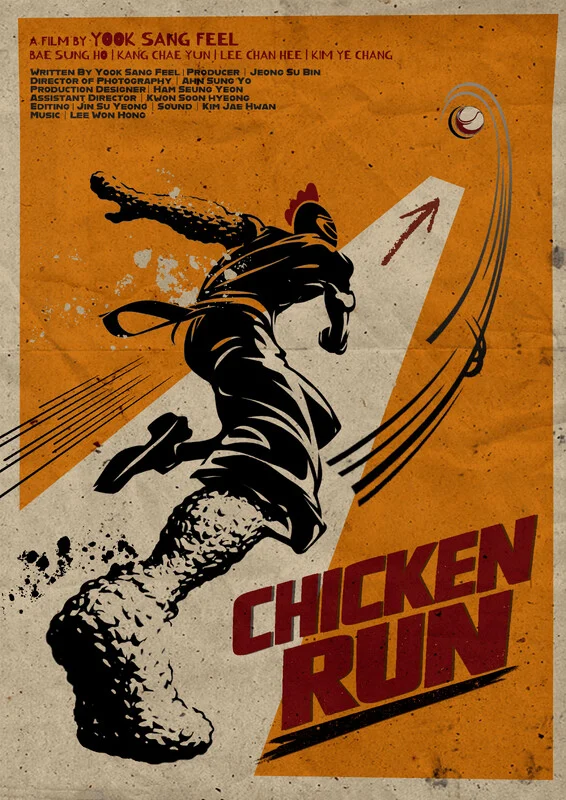
Best Student Film: Chicken Run
Best Screenplay: Kicking Toward Tomorrow!
Best Director: Short of Breath
Best Cinematography: The Ashes
Best Editing: A Million Ways to Return Home
Best Actor: CHIKUWACCHA!!
Limited-Time Schedule
30 JUNE — 2 JULY
※ Please note that all films will be automatically removed from the online screening platform after the screening period ends.
While grounded in the rough, unadorned realism of post-socialist landscapes associated with Jia Zhangke, the film achieves a cool, refined lyricism reminiscent of Paweł Pawlikowski’s <Ida> and <Cold War>. Rather than sentimentally tracking the character’s suffering, the camera formalizes the relationship between desolate landscapes and the figure through deep focus, allowing space itself to bear witness to history and psychology.
A film that presents the aesthetic and ethical frontier currently attainable in AI cinema. Its greatness lies in an auteurist insight that reverses the instrumental constraint of “limitations on the depiction of real child actors” into a thematic inquiry into the aesthetic capture and desensitization of suffering. The hybrid workflow—combining live-action textures with AI-generated animated faces—creates a peculiar aesthetic tension alongside a meta-critical message.
A spirited film that transcends the constraints of a university project through bold budgeting and technical experimentation, rendering the defeatism of Korea’s younger generation through a form of magical realism. While the layers dealing with narrative causality and inner turmoil remain somewhat conventional, the work is highly commendable for its experimental spirit—distinctive of student cinema—and its directorial ambition to break through tragic reality through the paradox of comedic imagery.
A documentary that disrupts the habitual social tendency to dismiss the helplessness and confusion of the younger generation as merely a “process of growth” or a “rite of passage.” By dedicating a long period to capturing the protagonist’s struggle, it offers a moment of reflection on how easily society standardizes and neglects individual failure.
While it is difficult to shake the impression that the film is overly explicit, it nonetheless succeeds in evoking emotional resonance through its use of transitions between cuts and the interplay of sound.
The film demonstrates a strong narrative design in framing the world of sports that the protagonist, Dongchan, encounters not as mere play or recreation, but as the only arena in which he can prove his existence. While the narrative remains somewhat on the surface and does not fully delve into the character’s depths, it is commendable for the density of its dialogue and the effective arrangement of dramatic devices that heighten conflict.
The film’s protagonist moves beyond performance, proving a complete sense of “presence” before the camera. This energy of presence blends with the film’s gentle, positive tone, disarming the audience.
A film distinguished by its directorial control over fragmented moments, rhythms of breath, and emotional negative space. However, the accumulation of unexplained ellipses fails to fill the gaps in the narrative, instead hindering the audience’s active interpretation. It serves as a reminder of a cinematic paradox: what is left unsaid does not necessarily become what is felt.
Best Student Film
Best Screenplay
Best Director
Best Actor
Best Editing
Best AI Film
Sea-Hoon Jeon
Kang-Ryeong Lee
Jin-Yong Seung
Jeong-Hyo Moon
Drag & Drop Website Builder